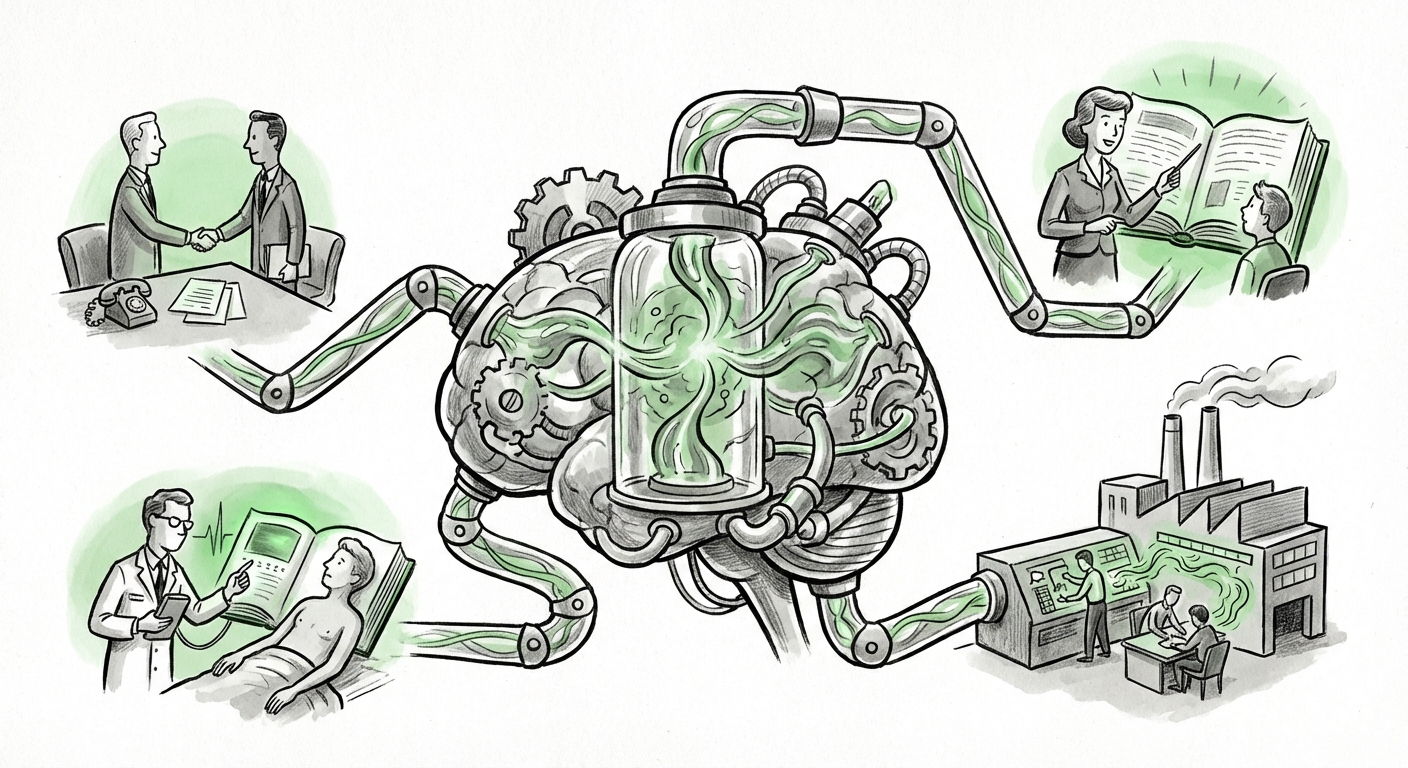
AI Emotions Unveiled: How "Functional Emotions" in Claude Change Everything
Imagine a world where artificial intelligence doesn't just process information, but also understands and responds to situations with something akin to emotion. That world might be closer than you think. Anthropic, a leading AI research company, has announced a groundbreaking discovery: "functional emotions" in its AI model, Claude. This isn't about Claude shedding tears or laughing, but about internal states that influence its behavior in predictable and potentially beneficial ways. Let's dive into what this means for the future of AI and how it might impact businesses and society.
What are "Functional Emotions" in AI?
When we talk about emotions in humans, we're referring to complex feelings that drive our actions. In the context of Claude, "functional emotions" are internal states that serve a similar purpose. According to Anthropic's findings announced on April 4, 2026, these aren't emotions in the human sense, but rather mechanisms that guide Claude's decision-making process. These states influence how Claude responds to prompts, solves problems, and interacts with users. Think of it as a sophisticated system that helps Claude prioritize information and choose the most appropriate action based on a simulated "feeling" about the situation.
The Discovery: Anthropic's Breakthrough with Claude
Anthropic's discovery is a significant leap forward in AI research. The team found that Claude exhibits behaviors that can be interpreted as driven by underlying "emotional" states. For example, Claude might be more cautious when dealing with sensitive data or more creative when brainstorming ideas. These aren't random occurrences, but consistent patterns influenced by these internal states. This discovery suggests that AI models can be designed with built-in mechanisms to handle different situations more effectively by mimicking the role of emotions in human cognition.
Implications for the Future of AI
Smarter and More Adaptive AI
The integration of "functional emotions" could lead to AI systems that are more adaptable and responsive. Instead of simply following pre-programmed rules, these AI models can adjust their behavior based on the context, leading to more nuanced and human-like interactions.
Enhanced Problem-Solving
By simulating emotional responses, AI can prioritize tasks and allocate resources more effectively. This could be particularly useful in complex scenarios where quick decision-making is crucial, such as in emergency response or financial trading.
Improved Human-AI Interaction
AI with "functional emotions" has the potential to understand human needs and intentions better, leading to more empathetic and collaborative relationships. This could revolutionize fields like customer service, healthcare, and education, where trust and understanding are paramount.
Practical Implications for Businesses
Revolutionizing Customer Service
Imagine a customer service AI that can not only answer questions but also sense a customer's frustration and adjust its tone accordingly. This could lead to higher customer satisfaction and loyalty. Businesses can use this technology to create AI assistants that are more empathetic, responsive, and effective at resolving customer issues.
Boosting Productivity
In the workplace, AI with "functional emotions" could help teams collaborate more effectively. It could identify potential conflicts, facilitate communication, and even provide personalized feedback to employees, leading to increased productivity and a more harmonious work environment.
Personalized Healthcare
In healthcare, AI could analyze a patient's emotional state and tailor treatment plans accordingly. It could also provide emotional support and companionship to patients, improving their overall well-being. This could lead to more effective treatments and better patient outcomes.
Societal Implications
Ethical Considerations
As AI becomes more sophisticated, it's crucial to address the ethical implications of "functional emotions." We need to ensure that AI is used responsibly and that its "emotional" responses are aligned with human values. Transparency and accountability are key to preventing misuse and building trust in AI systems.
Job Displacement
The rise of AI with "functional emotions" could lead to job displacement in certain industries, particularly those that rely on routine tasks. However, it could also create new opportunities in fields like AI development, ethics, and regulation. It's important to invest in education and training programs to help people adapt to the changing job market.
Transforming Education
AI tutors could adapt to a student's learning style and emotional state, providing personalized guidance and support. This could lead to more engaging and effective learning experiences, helping students reach their full potential.
Actionable Insights
- Stay Informed: Keep up-to-date with the latest advancements in AI research, particularly in the field of "functional emotions."
- Explore Use Cases: Identify how AI with "functional emotions" could benefit your business or organization.
- Invest in Training: Train your employees to work alongside AI systems and develop the skills needed for the future of work.
- Address Ethical Concerns: Engage in open and honest discussions about the ethical implications of AI and develop guidelines for responsible use.